
 Explore Ideas in Progress from the Center for Urban Research
The Center for Urban Research is committed to open dialogue around the challenges and possibilities of neighborhood revitalization. This page shares in-progress ideas and evolving perspectives from our team, with the goal of sparking conversation and inviting feedback.
Each topic includes materials designed to support reflection or facilitate group discussion. We invite community members, researchers, and practitioners to explore, question, and contribute to these conversations.
All Content
Blurb / Gallery Set
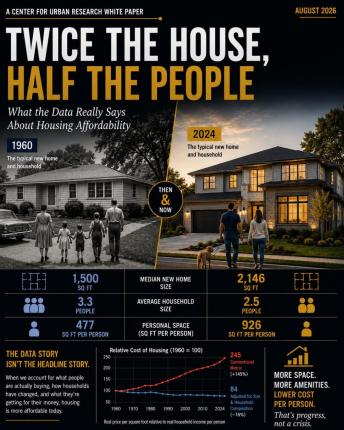
What if the housing affordability crisis is more complicated than the headlines suggest?
Twice the House, Half the People argues that traditional affordability measures miss important changes in home size, household composition, housing quality, and location. While recent price spikes and high-cost metros present real challenges, this paper suggests the long-term story is less about a universal housing crisis and more about land constraints, interest rates, construction productivity, and access to opportunity.
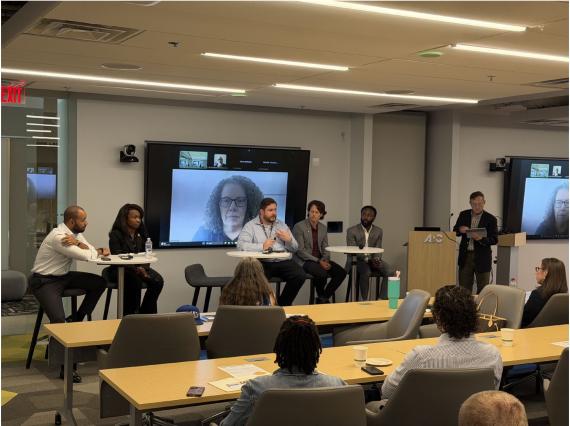
Future of Transit Summary
The Future of Transit symposium explored how Atlanta’s transit system can adapt to changing travel patterns, emerging technologies, and continued regional growth. Discussions highlighted the need for expanded access, more reliable and connected service, and stronger regional collaboration to build a transportation system that meets the diverse needs of communities across the region.
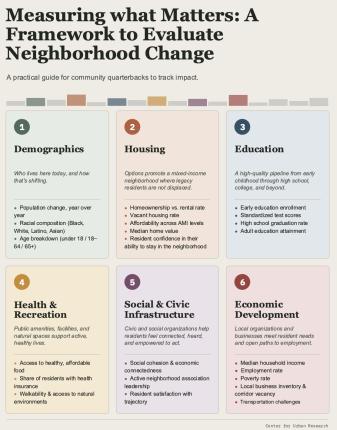
Measuring What Matters: A Framework to Evaluate Neighborhood Change
Measuring What Matters: A Framework to Evaluate Neighborhood Change is a practical guide designed to help community organizations and local governments track neighborhood change using research-backed metrics tied to actionable decision-making. The guide focuses on the indicators that best reflect outcomes for residents and support evidence-based neighborhood investment and planning.
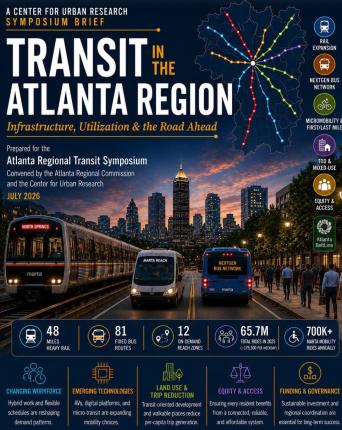
Prepared for the Atlanta Regional Transit Symposium, this brief explains how changing travel patterns, emerging technologies, land use, and demographic shifts are reshaping the future of mobility. It examines the region's current transit system, key planning challenges, and strategies for building a more connected, equitable, and resilient transportation network.
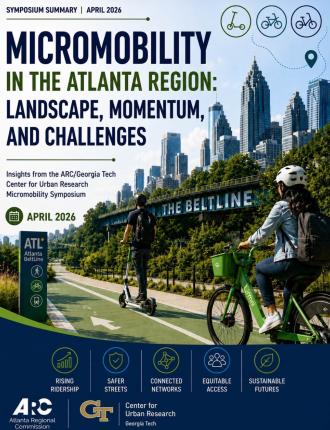
This report summarizes key insights from the inaugural Atlanta Regional Micromobility Symposium, exploring how e-bikes, scooters, and other shared mobility options can improve regional connectivity. It highlights opportunities and challenges related to infrastructure, safety, equity, technology, and policy while emphasizing micromobility's growing role in creating a more connected, sustainable, and multimodal transportation system.
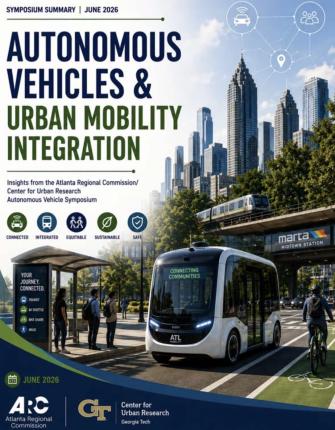
This report summarizes key insights from the Atlanta Regional Autonomous Vehicle Symposium, examining how autonomous vehicles can be integrated into a connected, multimodal transportation system. It explores the roles of policy, governance, data, safety, infrastructure, and public transit, emphasizing that the success of autonomous vehicles depends on thoughtful integration, not technology alone.
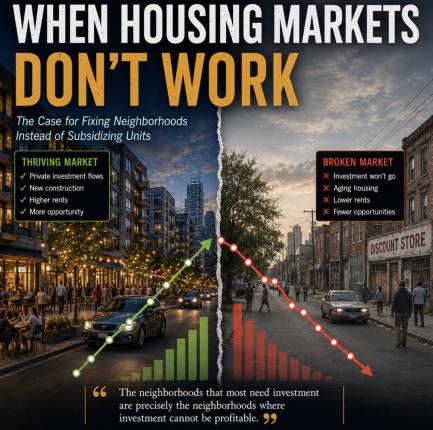
What if the housing crisis isn't actually a housing crisis?
This paper argues that the real challenge isn't simply building more affordable housing, it's creating neighborhoods where housing markets actually work.
That means thinking beyond housing alone and considering:
- Neighborhood conditions
- Walkability and infrastructure
- Schools-
- Access to daily amenities
- Economic opportunity
- Community organizations
- Private investment alongside public investment
The Value of Concentrating Neighborhood Investment
In this article for Governing, Stephen Goldsmith examines Atlanta’s Neighborhood Reinvestment Initiative and the city’s strategy of concentrating public investment in a small number of historically underserved neighborhoods rather than spreading resources thinly across the city. The piece explores how coordinated investments in housing, transit, grocery access, parks, schools, and public infrastructure can create long-term neighborhood stability, while also highlighting the challenges of sustaining equitable growth and preventing displacement.

Atlanta’s drop in murders is a quiet miracle. Here’s how to sustain progress.
What explains Atlanta's historic decline in violent crime?
This op-ed argues that the answer extends beyond policing to include neighborhood revitalization, stronger social ties, and community investment.
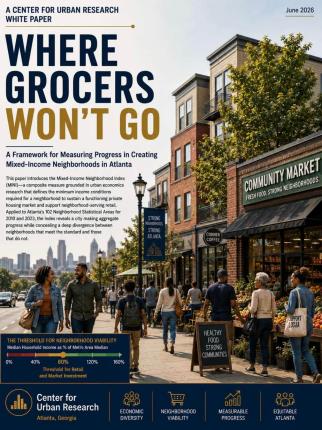
Where Grocers Won't Go
In this paper, David Edwards examines the relationship between neighborhood income levels, private investment, and long-term community stability in Atlanta. Using a newly developed measurement framework, he explores which neighborhoods are benefiting from the city’s growth, which continue to face structural barriers to investment, and what this reveals about equitable urban development.
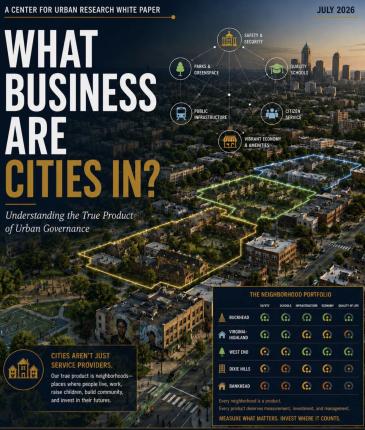
What Business Are Cities In?
What business are cities really in?
This paper argues that cities aren't simply providers of services--they are creators of neighborhoods. By treating neighborhoods as the fundamental product of urban governance, cities can better measure success, coordinate investments, and improve the places where people live, work, and thrive.
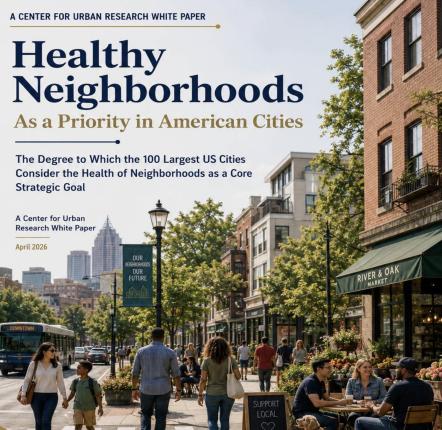
What if the key to safer, healthier, and more economically vibrant cities is not individual programs, but the design of neighborhoods themselves? This paper examines whether the 100 largest U.S. cities treat “healthy neighborhoods” as a core planning goal in the Jane Jacobs sense: walkable, mixed-use, dense, socially vibrant urban environments. It finds that only Portland, Houston, and Atlanta explicitly frame neighborhood policy this way, while many other cities pursue similar ideas under terms like “complete neighborhoods” or “20-minute cities.” Most cities still use “healthy neighborhoods” primarily in a public-health context focused on issues like housing safety and disease prevention. The paper concludes that although Jacobs-style urban planning is growing, the lack of shared language limits coordination, policy learning, and advocacy across cities.
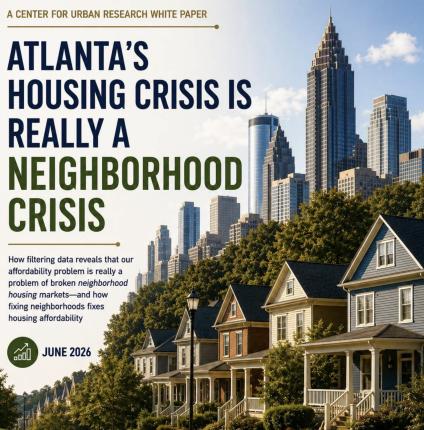
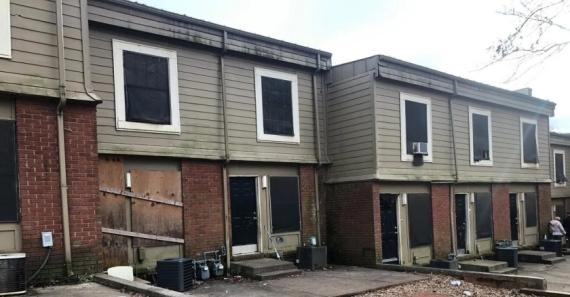
Atlanta doesn’t have a housing shortage; it has a neighborhood imbalance. While prices soar in high-demand areas, other parts of the city sit underinvested with vacant homes and untapped potential. New data on housing “filtering” shows that affordability breaks down when neighborhood markets break down.
What if fixing neighborhoods, not flooding the city with subsidies, is the real solution?
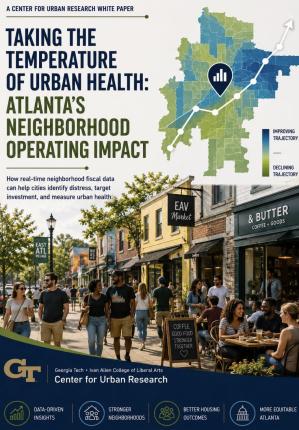
Taking the Temperature of Urban Health: Neighborhood Operating Impact
The statistics and dashboards that city officials use to inform their decisions are often outdated by the time they are analyzed and applied. Explore a new tool, the Neighborhood Operating Impact, which can quickly assess the financial health of a neighborhood and how it changes over time.

What is Displacement and How do We Measure It?
Explore how neighborhood revitalization efforts aim to promote inclusive, mixed-income communities while preventing the displacement of long-term, low-income residents of color.

Neighborhood Reputations and Place Branding: Why do they matter?
Explore the importance of neighborhood brand and reputation, how a neighborhood's brand and residents influence each other, and how residents can use place branding to guide the future of their neighborhood.
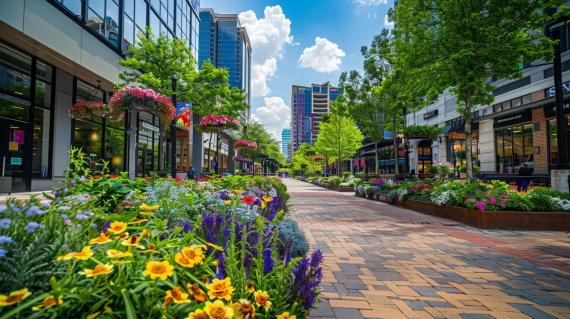
How Can We Grow Commercial Corridors Without Displacing Local Businesses?
Explore how cities can invest in streetscape improvements and attract vibrant, community-serving businesses without displacing long-standing local anchors. This conversation examines zoning incentives, tax tools, tenant protections, and strategies to balance economic growth with neighborhood stability and walkability.